
How Visual Timers Transform ADHD Time Management: A Complete Guide
Discover how visual timers help individuals with ADHD overcome time blindness and improve focus. Evidence-based strategies and practical tips for better time management.
Living with ADHD often means struggling with what experts call 'time blindness' - the difficulty in accurately perceiving the passage of time. While neurotypical individuals can estimate how much time has passed or remains, people with ADHD frequently experience time as either 'now' or 'not now.' This fundamental difference in time perception makes traditional time management techniques less effective. Enter visual timers: a game-changing tool that transforms abstract time into something concrete and visible. Unlike standard digital clocks that simply display numbers, visual timers provide a clear, at-a-glance representation of time passing, making them invaluable for ADHD time management.
Understanding Time Blindness in ADHD
Time blindness is one of the most challenging yet least understood aspects of ADHD. Research shows that the ADHD brain processes time differently due to variations in dopamine regulation and executive function. The prefrontal cortex, which helps us estimate time, plan ahead, and maintain temporal awareness, functions differently in individuals with ADHD. This means that tasks which seem like they should take 15 minutes might feel like they take 5 minutes or an hour. Without external time cues, people with ADHD struggle to gauge how long they have been working on something or how much time remains. This is not a character flaw or lack of effort - it is a neurological difference that requires different tools and strategies. Visual timers address this by providing constant, passive feedback about time passage without requiring active monitoring or mental calculation.
How Visual Timers Work for the ADHD Brain
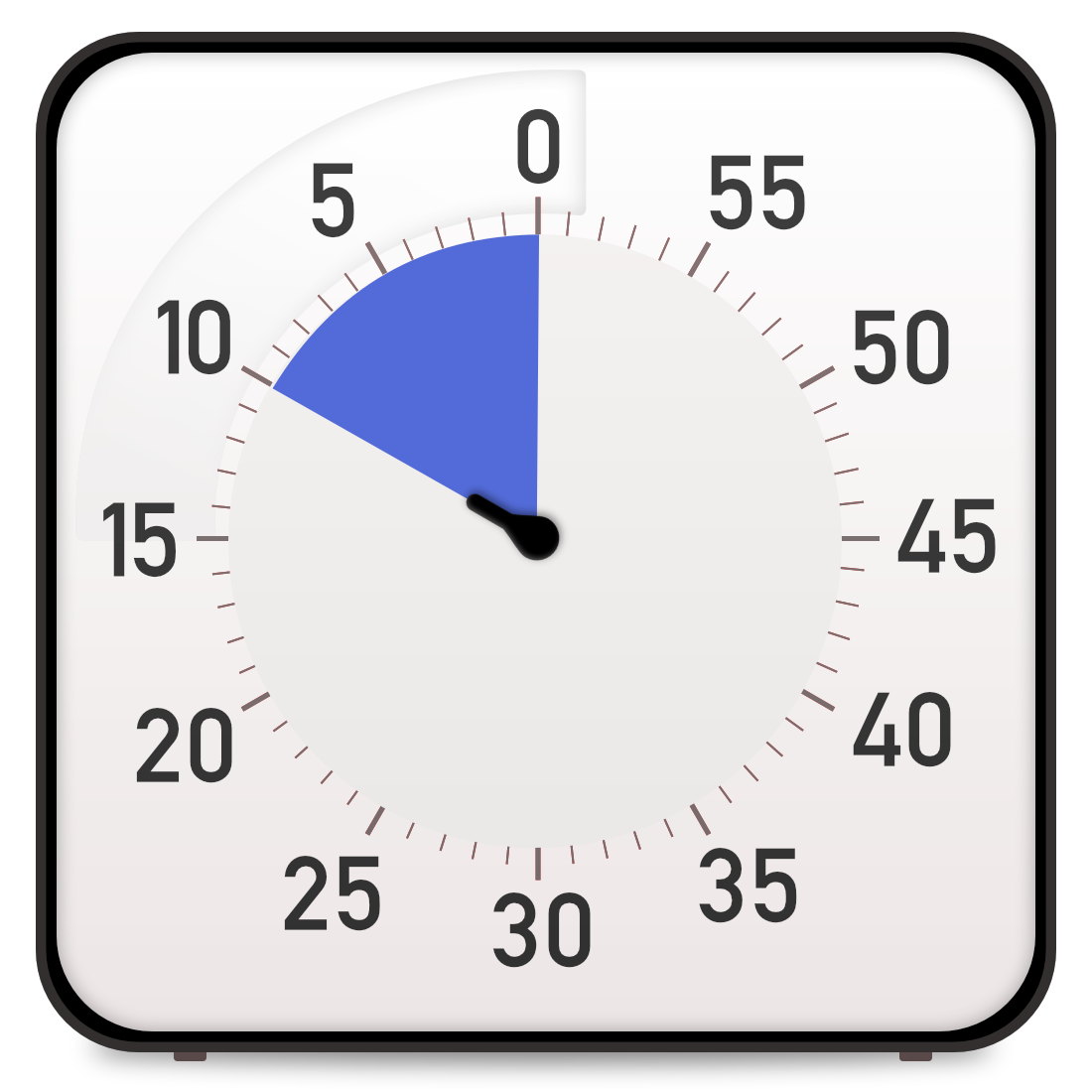
Visual timers work by engaging the brain through multiple sensory channels simultaneously. Instead of requiring you to interpret numbers and mentally calculate remaining time, visual timers show time as a shrinking pie chart or colored segment. This visual representation activates different neural pathways than reading a digital clock. For the ADHD brain, which often excels at visual-spatial processing, this format is more intuitive and requires less executive function to interpret. The timer becomes a passive awareness tool - you can glance at it and immediately know how much time remains without breaking your focus. The visual countdown also provides a sense of urgency that helps combat ADHD-related procrastination. As the colored section shrinks, your brain receives a gentle but persistent reminder that time is actually passing, helping bridge the gap that time blindness creates.
Practical Applications for Daily Life
Visual timers can transform numerous daily challenges for people with ADHD. Start your morning routine with a 30-minute timer to prevent hyperfocus in the shower or getting lost reading articles during breakfast. Use 15-minute timers for household tasks like loading the dishwasher or folding laundry - tasks that often feel endless can become manageable when you can see the finish line approaching. For work or study, implement the Pomodoro Technique with 25-minute focus sessions followed by 5-minute breaks. The visual countdown helps maintain focus during work periods and makes breaks feel legitimate rather than procrastination. Transition times are particularly challenging with ADHD, so set a 10-minute timer when you need to leave for an appointment, providing visual feedback as you gather items and prepare to go. Even leisure activities benefit - set a timer for scrolling social media or playing games to prevent the common ADHD experience of 'just five more minutes' turning into two hours.
Choosing the Right Visual Timer for Your Needs
The effectiveness of a visual timer depends on choosing one that matches your specific needs and preferences. Physical visual timers, like the popular Time Timer, offer a tactile, distraction-free experience with no screen time involved. However, they can be expensive and require being in the same room to see them. Online visual timers, like Focus Clock, provide flexibility and accessibility from any device, cost nothing, and can be easily customized for different time increments. Consider your environment: if you work on a computer all day, an online timer that lives in a browser tab makes sense. If you are working with children or away from screens, a physical timer might be better. Some people with ADHD benefit from auditory cues in addition to visual ones, so look for timers with optional sound alerts. The key is consistency - whatever type you choose, use it regularly so it becomes a trusted external support for your internal time perception challenges.
Evidence-Based Strategies for Success
Research on ADHD time management consistently shows that external time cues significantly improve task completion and reduce anxiety. To maximize the benefits of visual timers, start with realistic time estimates - people with ADHD often underestimate how long tasks take, so add buffer time to your initial guess. Make the timer constantly visible rather than hidden in another window or face-down on your desk; the visual feedback only works if you can actually see it. Pair timer use with body doubling (working alongside someone else) for additional accountability and focus. Track which time increments work best for different types of tasks - you might discover that 20 minutes works better for creative work while 45 minutes suits analytical tasks. When the timer goes off, actually stop and take a break, even if you feel in the zone; this teaches your brain to trust the system and helps prevent burnout. Finally, be patient with yourself. Like any skill, using visual timers effectively takes practice, but the neurological support they provide for time blindness makes them worth the adjustment period.
Conclusion
Visual timers are not just helpful tools for ADHD time management - they are essential accommodations that address a genuine neurological difference in time perception. By providing constant visual feedback about time passage, these timers compensate for executive function challenges and help bridge the gap that time blindness creates. Whether you choose a physical timer or an online solution like Focus Clock, the key is consistent use and patience as you develop new time management habits. Remember, needing external support for time management is not a weakness; it is a smart strategy that leverages your visual strengths to compensate for neurological differences. Start with one area of your life - morning routine, work sessions, or transition times - and experience how visual timers can transform your relationship with time.
Try Focus Clock
Ready to improve your time management with visual timers? Focus Clock is a free online visual timer that helps you stay focused and productive.
Start Using Focus Clock