Visual Timers for Kids: Teaching Time Management in the Classroom
Practical guide for teachers and parents using visual timers to help children develop time management skills, improve transitions, and reduce anxiety in classroom settings.
Time is one of the most abstract concepts that children must learn to understand, yet it is fundamental to nearly every aspect of school and life. Young children, especially those in elementary grades, struggle to comprehend how long five minutes or twenty minutes actually feels. This temporal confusion leads to frustration during transitions, difficulty completing tasks on time, and anxiety about unknown durations. Visual timers transform this invisible concept into something concrete and understandable. By showing time as a physical quantity that shrinks or disappears, visual timers help children develop genuine time awareness and self-regulation skills. Teachers who implement visual timers consistently report smoother transitions, reduced behavioral issues, and students who are more engaged and less anxious about time-related expectations.
Why Children Struggle with Abstract Time
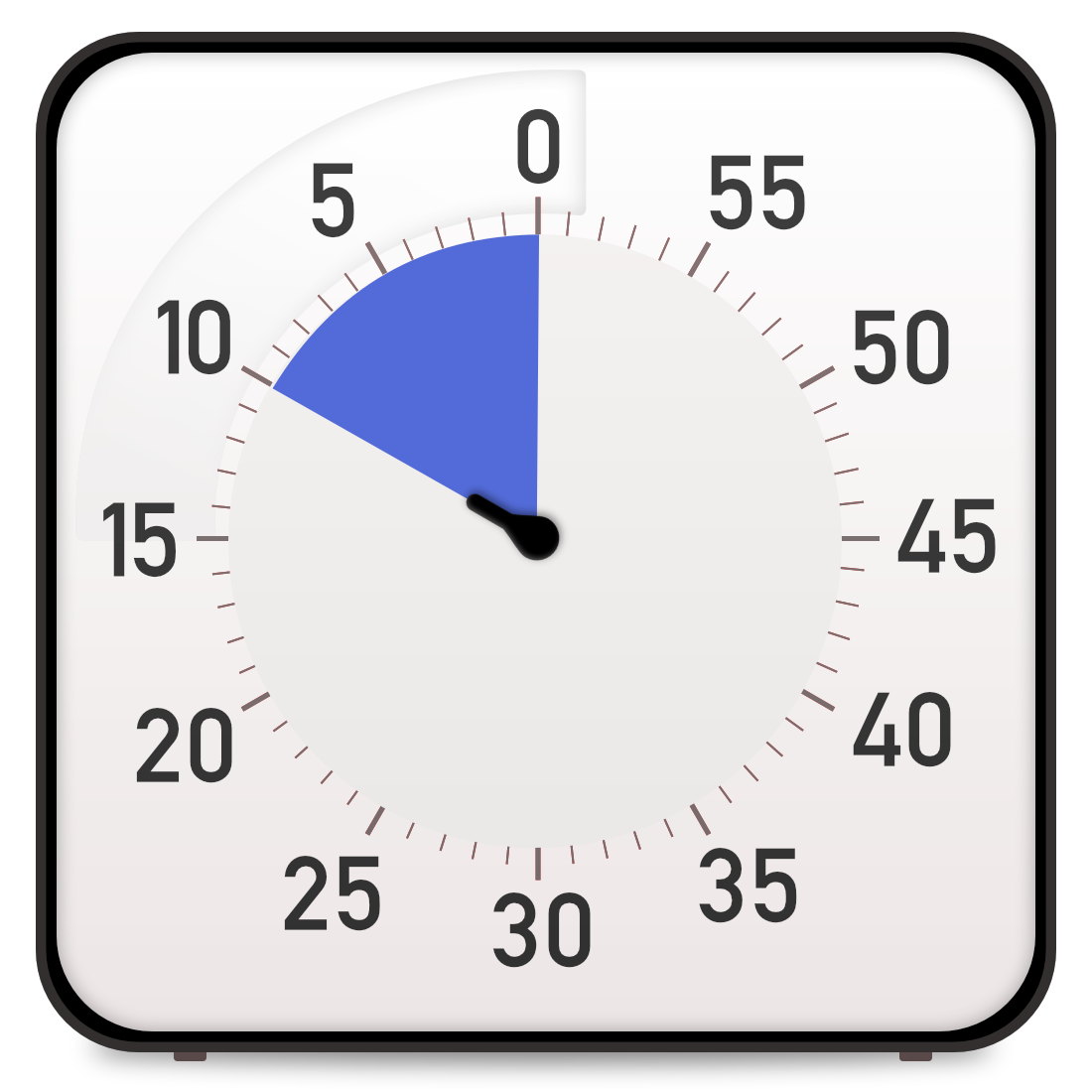
Children's brains are still developing the cognitive architecture needed for abstract thinking, and time is among the most abstract concepts they encounter. Unlike physical quantities they can see and touch, time remains invisible and intangible. When a teacher says 'You have 10 minutes to finish,' a young child has little frame of reference for what that actually means. Is 10 minutes long enough? Too long? Almost over? This uncertainty creates stress and makes it difficult for children to pace themselves appropriately. Research in developmental psychology shows that children under age seven have particularly limited time estimation abilities, relying heavily on external cues to gauge duration. Even older elementary students struggle to accurately estimate time passage. Traditional clocks compound this problem - reading an analog clock requires multiple cognitive steps, while digital clocks show numbers that need mental conversion into meaningful duration. Visual timers bypass these cognitive demands by making time literally visible. The shrinking colored section provides instant, intuitive understanding of how much time remains, working with the child's natural visual processing abilities rather than against their developing abstract reasoning skills.
Implementing Visual Timers for Classroom Transitions
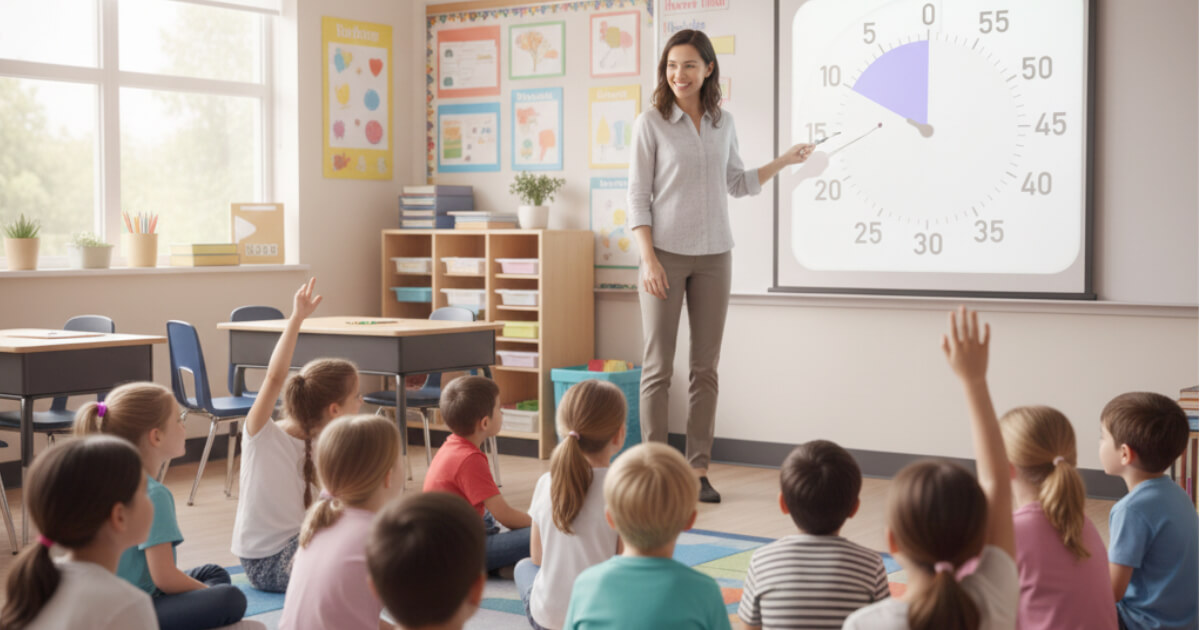
Transitions between activities are among the most challenging parts of the school day, often consuming 15-20% of instructional time while generating most behavioral issues. Visual timers dramatically improve transitions when used consistently. Start by introducing the timer concept: show students the full timer, explain that the colored part shows time remaining, and demonstrate how it shrinks. Practice with a one-minute timer so they can see the full cycle quickly. For actual transitions, provide more time than you think necessary initially - success builds buy-in. Set a 5-minute timer for cleanup and say 'When the red part is gone, cleanup time is over.' Position the timer where all students can easily see it, ideally projected on the screen or using a large physical timer at the front of the room. Provide a verbal cue at the halfway point: 'We are halfway done with cleanup time.' As the timer winds down, students naturally increase their pace because they can see the urgency. When the timer reaches zero, immediately acknowledge completion: 'The timer is done, and look how clean our classroom is!' This positive reinforcement connects the timer to success. After several weeks of consistent use, you will notice students self-monitoring their progress by glancing at the timer, and transition time can often be reduced as they become more efficient.
Using Visual Timers to Build Time Awareness
Beyond managing transitions, visual timers are powerful teaching tools for developing genuine time sense. Create 'time prediction' activities where students estimate how long tasks will take, then use the timer to check their accuracy. Before starting a worksheet, ask 'How long do you think this will take?' and write estimates on the board. Set the timer and then discuss afterward whether it took longer or shorter than expected. This builds metacognitive awareness about time and task duration. Use consistent time blocks for regular activities so students begin associating certain durations with specific amounts of work. If independent reading always uses a 20-minute timer, students internalize what 20 minutes of reading feels like. Create a visual schedule that incorporates timers for each activity block, helping students understand the day's rhythm and anticipate upcoming transitions. Play time estimation games: show students a timer and ask them to tell you when they think 30 seconds have passed without looking at the clock, then show them the actual timer to compare. Teach different time increments through movement: 'Let us jump for one minute and see how long that is.' These concrete experiences with timed activities help children construct internal time frameworks that serve them throughout life.
Supporting Children with Special Needs
Visual timers are particularly valuable for children with autism, ADHD, anxiety disorders, and other special needs. For children with autism, the timer provides predictability and structure, reducing the anxiety that comes from uncertain durations or unexpected transitions. The visual countdown helps prepare them mentally for what comes next. Children with ADHD benefit enormously from the external time representation, as many struggle with time blindness similar to adults with ADHD. The visible countdown compensates for weak internal time perception and provides the external structure their executive function challenges require. For students with anxiety, knowing exactly how long an activity will last and being able to see time progressing reduces worry about endless durations. The timer also provides a neutral authority - it is not the teacher being arbitrary, it is simply what the timer says. For children with language processing challenges, the visual timer communicates without requiring verbal understanding. Implement timers consistently across activities to build routine and security. Some special needs students benefit from personal timers at their desks, allowing them to self-regulate without constant teacher monitoring. Always introduce timers during calm, low-stress activities first so children associate them with success and structure rather than pressure.
Age-Appropriate Timer Strategies
Different age groups benefit from visual timers in different ways. Preschool and kindergarten students need short durations (1-5 minutes) with very simple language: 'When the red is gone, it is time to line up.' Use timers for circle time, cleanup, and waiting turns. First and second graders can handle longer durations (5-15 minutes) and benefit from learning to read the timer independently. Teach them to check the timer themselves during work time. Third through fifth graders can use timers for extended work periods (15-30 minutes) and begin using them for personal time management, like homework completion. Middle school students can apply timer techniques to study skills and test-taking, using them to pace themselves through multi-part assignments. For younger children, pair the timer with visual schedules showing the sequence of activities, creating comprehensive time-space structure. Older students can begin using timers as personal productivity tools, choosing their own durations for focused work. Regardless of age, consistency is crucial - if the timer says 5 minutes, honor that boundary. Children lose trust in the system if adults constantly extend time or ignore the timer. When you need to adjust duration, stop the current timer, explain why, and set a new timer rather than just letting it run over.
Conclusion
Visual timers are among the most versatile and effective classroom management tools available to educators. By making abstract time concrete and visible, they help children develop crucial time awareness and self-regulation skills while reducing transition challenges and classroom stress. The beauty of visual timers is their simplicity - they require minimal training, work across age groups and ability levels, and provide immediate benefits. Whether you are managing classroom transitions, teaching time concepts, or supporting students with special needs, visual timers offer a consistent, neutral, and highly effective solution. Start with one application, like transition times or cleanup, and expand as you and your students become comfortable with the tool. Tools like Focus Clock make implementation even easier by providing free, accessible timers that can be displayed for whole-class use. The time investment in establishing timer routines pays dividends throughout the year in smoother classroom operation, better student focus, and children who are developing essential time management skills that will serve them for life.
Try Focus Clock
Ready to improve your time management with visual timers? Focus Clock is a free online visual timer that helps you stay focused and productive.
Start Using Focus Clock