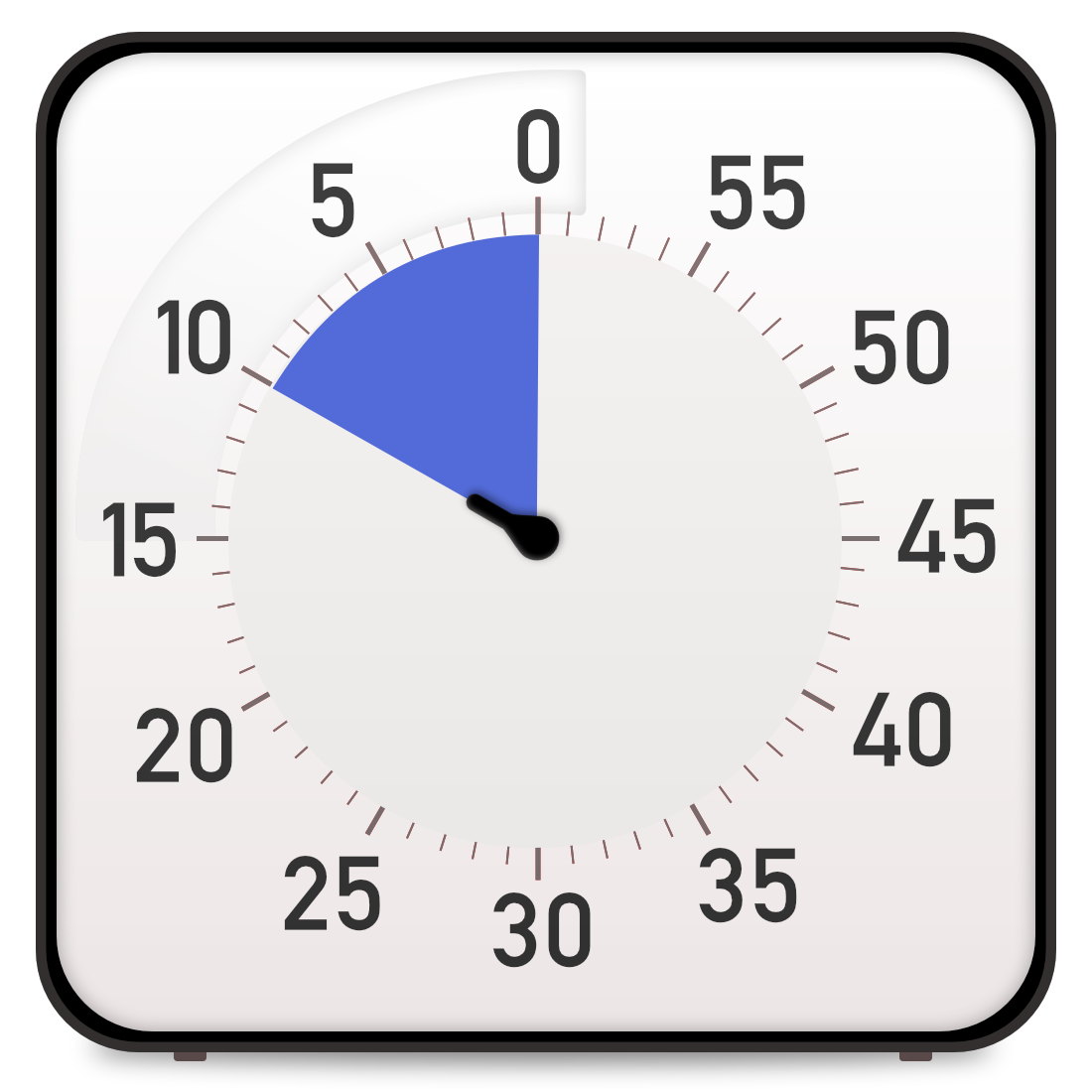

60-Minute Study Sessions: How Visual Timers Improve Student Performance
Evidence-based study techniques using visual timers to boost academic performance. Learn how students can optimize focus, retention, and exam preparation with timed study sessions.
Academic success depends heavily on the quality of study time, not just quantity. Students who study for hours without structure often retain less information than those who use focused, time-bounded sessions. Research consistently shows that attention and retention drop significantly after 45-60 minutes of continuous study, yet many students push through marathon sessions with diminishing returns. Visual timers provide the structure that transforms unfocused study time into highly productive learning sessions. By creating clear boundaries, visual timers help students maintain peak focus during study periods while ensuring adequate breaks for consolidation. Students using timed study techniques report 25-40% improvement in retention and significantly reduced study-related stress. The visible countdown addresses common student challenges: difficulty starting, not knowing when to break, and the anxiety of open-ended study sessions that seem to stretch forever.
The Science of Study Session Duration
Cognitive science research provides clear guidance on optimal study session length. The average person can maintain high-quality attention for 45-60 minutes before mental fatigue sets in. During this peak focus window, information processing, critical thinking, and memory encoding operate at maximum efficiency. After 60 minutes, effectiveness drops sharply even though students may not consciously notice their declining focus. Brain imaging studies show that neural activity patterns associated with learning become less efficient after sustained periods without breaks. The hippocampus, crucial for forming new memories, benefits from intermittent rest to consolidate information learned during active study. This is why cramming for hours straight is far less effective than spaced study sessions with breaks. For younger students or those studying particularly challenging material, even shorter sessions of 20-30 minutes may be optimal. The key finding across all research is that bounded study time with visible endpoints produces better learning outcomes than unbounded time. Visual timers make it easy to implement science-backed session lengths, helping students work with their brain's natural learning rhythms rather than against them.
Setting Up Effective Study Sessions
Successful timed study sessions start with proper planning and setup. Before setting your timer, identify your specific study objective. Vague goals like 'study for biology' are less effective than specific targets: 'read and take notes on chapter 7, sections 1-3.' This specificity helps you assess whether the session was productive and builds better time estimation skills. Gather all materials before starting the timer - textbooks, notes, laptop, pens, water - to prevent interruptions that break focus. Choose your study location carefully. Find a space with minimal distractions where you can leave your materials set up between sessions if possible. Let roommates or family members know you are entering a focus session and will be available when the timer goes off. Silence your phone completely or leave it in another room - notifications fragment attention and reduce retention. Set your visual timer for your chosen duration, typically starting with 45-50 minutes until you know your personal optimal length. Position the timer where you can see it with a brief glance but it is not so prominent that it becomes a distraction itself. Take a deep breath, note your start time, and begin working on your specific objective. The visual countdown will provide time awareness without requiring you to actively track minutes.
The Study-Break-Review Cycle
Maximum learning efficiency comes from a three-phase cycle: focused study, active break, and quick review. During your timed study session, work with full attention on your predetermined material. When the visual timer indicates 5 minutes remaining, finish the concept or problem you are working on rather than starting something new. This prevents the frustration of interrupting mid-thought and creates natural stopping points. When the timer completes, immediately stop studying - even if you feel momentum. This discipline trains your brain to trust the system and prevents burnout. Take a 10-15 minute break after each session. The break should be active and screen-free if possible: walk around, stretch, get a snack, talk to someone, or step outside. Avoid activities that require significant mental effort like checking email or scrolling social media, as these prevent the cognitive rest your brain needs. Before starting your next study session or if finishing for the day, spend 5 minutes reviewing what you just studied. This quick review dramatically improves retention by reinforcing neural pathways while the information is fresh. After completing three or four sessions (roughly 3-4 hours of actual study time), take a longer break of 30-60 minutes for a meal or recreation. This rhythm creates sustainable study habits that maximize learning while preventing exhaustion.
Adapting Timers for Different Study Tasks
Different types of studying benefit from different session structures. For reading comprehension and note-taking, 45-60 minute sessions work well because reading builds momentum that shorter sessions interrupt. Set a timer for 50 minutes, read actively, and take notes as you go. For problem sets in math, physics, or chemistry, shorter 30-40 minute sessions prevent mental fatigue from intense analytical work. The visible timer helps you recognize when problem-solving efficiency is declining. For memorization tasks like vocabulary, formulas, or historical dates, use 20-30 minute sessions with active recall techniques, then take a break before the next round. The shorter duration maintains the high energy that memorization requires. For essay writing or creative assignments, try longer 60-90 minute sessions during brainstorming and drafting phases when flow state is valuable, but shorter 30-45 minute sessions for editing when attention to detail matters more than creative momentum. For exam review, alternate between 40-minute focused review sessions and 15-minute practice problem sessions, using the timer to maintain the rhythm. Track which durations work best for different subjects and tasks, creating a personalized study timer strategy. Some students discover they focus best with 25-minute Pomodoro sessions for everything, while others need varied lengths. The visual timer makes experimentation easy.
Overcoming Common Study Timer Challenges
Students encounter several common challenges when implementing timed study sessions. The first is difficulty estimating how much material to tackle in one session. Start conservatively - it is better to finish early and extend the timer or start new material than to set unrealistic expectations that create frustration. Track how long different types of studying actually take, and your estimates will improve. Another challenge is the temptation to skip breaks when you feel focused. While this seems productive, it leads to faster mental fatigue and lower retention overall. Trust the science and take the breaks - your next session will be more productive. Some students struggle with feeling rushed by the visible countdown, experiencing anxiety rather than focus. If this happens, position the timer less prominently or try longer sessions to reduce time pressure. Conversely, some students find they zone out and ignore the timer completely. For these students, adding a gentle audible alert at the halfway point and end creates additional accountability. Dealing with material that does not neatly fit session lengths requires flexibility. If you are in the middle of a complex problem when the timer ends, take your break but keep the problem in mind, allowing your unconscious to work on it. You will often return with new insights. The most important thing is consistency - use the timer regularly even when it feels unnecessary, building a reliable study routine that your brain comes to trust and expect.
Conclusion
Visual timers transform studying from an ambiguous, often stressful marathon into a structured, efficient process aligned with how the brain actually learns best. By implementing 45-60 minute focused sessions separated by proper breaks, students can dramatically improve retention and understanding while reducing overall study time and stress. The visible countdown provides psychological reassurance that the session has limits while maintaining focus through clear time awareness. Whether you are preparing for a major exam, working through regular homework, or trying to master challenging material, timed study sessions using tools like Focus Clock create the structure that makes learning more effective and less overwhelming. Start by timing just one study session per day and notice the difference in your focus quality and how much you accomplish. As the technique becomes habitual, expand to timing all study periods. The investment in setting up this simple system pays exponential dividends in academic performance and reduced study-related anxiety throughout your educational journey.
Try Focus Clock
Ready to improve your time management with visual timers? Focus Clock is a free online visual timer that helps you stay focused and productive.
Start Using Focus Clock